

One of the common irritants of reading and thinking about books all the time is you inevitably conjure up a personal theory of reading. It might even be unconscious, but spend enough time with novels, and you begin to ask yourself, “What is all this about?”
Many contemporary readers approach novels as something akin to moral supplements, a crucial tool for remaining broad-minded in a divisive world. In short, literature makes us better people.
Then there is the academic approach, where books are often examined through an ideological lens. There is a certainty that literature is a useful “text” for thinking critically about injustices within society.
Reading Liebrecht
My own approach is more personal. I look for aesthetic and intellectual pleasure in fiction, of course, but I also seek to satisfy my curiosity about the perennial mysteriousness of people. The late critic Harold Bloom repeatedly said we read because our capacity to meet new people is necessarily limited. It’s something similar for me, or more specifically, because I’m terribly shy, novels provide me with a safe distance to “meet” people.
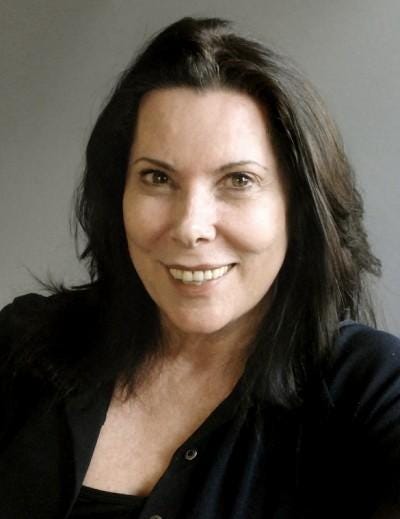
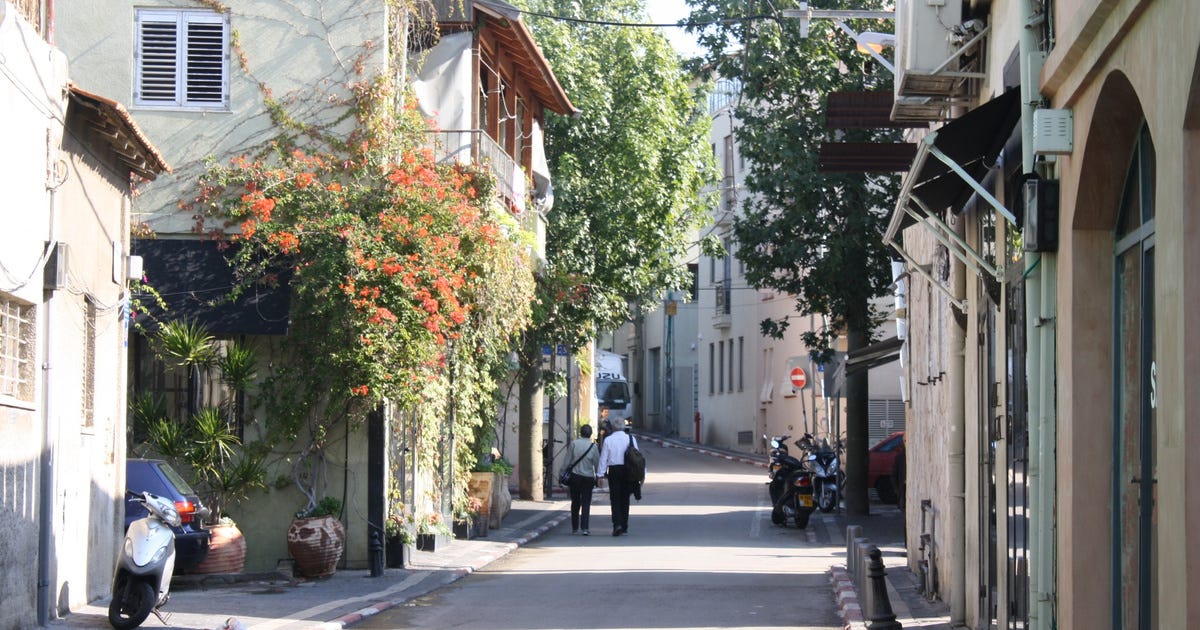
This brings me to the work of the Israeli writer Savyon Liebrecht. She was born in Munich, Germany, in 1948, to Holocaust survivors. She is a playwright, novelist, and short story writer, who has been named Israel’s Playwright of the Year four times and now lives in Tel Aviv.
In her work, I find a heightened awareness of the residue of memory, of how we live within memories, and how they operate as a shadow drama, looping like B-roll footage in the background as we live our lives, and without certainty that these remembrances are strictly accurate.
In observing Liebrecht’s characters across several novels, I’m also reminded of the line by Anthony Powell in one of his A Dance to the Music of Time books, where the narrator observes, “In the end, you have to let people live life on their own terms.”
I think this is precisely right, and strikes me as one of Liebrecht’s characteristics as a novelist.
In Liebrecht’s fiction we meet Adella, a Persian-Israeli woman, who is an orphan with a limp, but refuses to bow to the traditional, judgmental family that has “taken her in” as a young wife.
Or there is the poet-bohemian man, Aharon, who drags his young son around 1970s Tel Aviv, after being evicted from his apartment. He charms and sleeps with random women in cafes to secure a bed for him and his son, all the while his marriage and family life is in ruins.
I’m fascinated by the varied shades of self-determination in these characters.
Q&A with Liebrecht
I had the great pleasure to interview Liebrecht via an electronic exchange. The interview focused in particular on the following books, all translated into English:
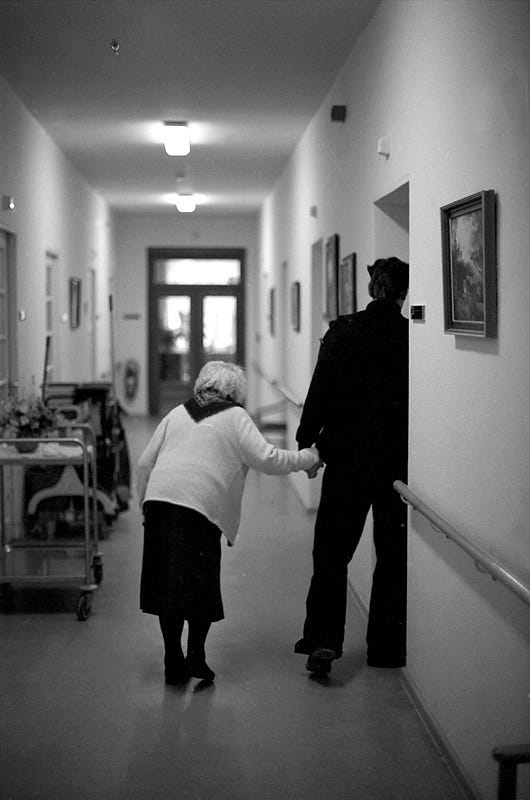
A Man and a Woman and a Man (2003): A married man and woman meet and have an extramarital affair while visiting their respective elderly parents in a Tel Aviv nursing home.
The Women My Father Knew (2010): An Israeli-American man living in the United States tries to remember the details of his childhood in Israel during a traumatic episode that leads to his father’s incarceration.
The Bridesman (2023): The story of Adella, a fiercely independent Persian-Israeli orphan who marries into a traditional family of the same background in the mid-1980s. It’s there she meets Micha, her husband’s young nephew, with whom she forms a special, and surprising bond.
Here is the full interview:
ROBERT FAY
The Bridesman centers on an Israeli family who are religious Iranian Jews. They live in a small community with fellow Iranians in the mid-1980s. Some of the tensions in this novel around marriage, family authority, and tradition might also have been explored within a Haredi community. What specifically attracted you to a Persian family as a novelist for this story?
SAVYON LIEBRECHT
There are similarities between the Persian-Jewish community and Haredi one since they are both religious and share traditions and ways of life. The main difference lies in the women’s position. In the first group men work and women are supposed to look after the house and the children. Whereas in the Haredi society - in Israel, not in the states – men learn and women go out working. Generally in traditional families males are more dominant. This was the reason a Persian family was chosen for this novel.
“In Israel, life is very political. Even the daily chores are political. Cleaning your son’s military uniform
is a political act.”
ROBERT
One of the major themes in your work involves the loss of memories and how people struggle to recover them. Meir in The Women My Father Knew tries to remember his childhood in Tel Aviv and a traumatic incident with his bohemian/poet father Aharon. In A Man and a Woman and a Man, the character Hamutal struggles with her mother’s memory loss in a nursing home, and her own repressed memories of childhood. You’ve spoken eloquently about being of “the 2nd generation”, the children of Holocaust survivors. You’ve said your parents told you nothing about their lives prior to your birth. Is it too simplistic to read these novels as your artistic effort to make sense of lost memories?
SAVYON
A very insightful remark. I suppose that the lost memories have to do with the fact that my parents forgot/suppressed their memories. I suppose that it also has to do with the fact that I live in a traumatic place. Anyway, memory, its loss and reconstruction are definitely my main subjects.
ROBERT
In an interview several years back, the Israeli novelist and poet Shimon Adaf described feeling alienated from Israeli fiction as a young man. He believed “its concern is the national aspect of Israeli society” and this was too restrictive. In some sense, are Israeli writers unfairly burdened with an expectation of addressing “the national story” or even “Jewish identity,” in a manner that American or French novelists are not? And how do you think about your own work in this context?
SAVYON
I suppose it is very personal and both decisions are legitimate. What makes a novel good or bad is not its commitment to a historical or political issue but the way of dealing with the subject, with the plot. Some writers solve it by writing articles for papers, so there is a clear division between their political views and their literary work. (Amos Oz used to say that he writes with two pens, one for each). In Israel, life is very political. Even the daily chores are political. Cleaning your son’s military uniform is a political act. As for myself, I write a lot about the Holocaust, about the rift between orthodox and secular people, about the rift between Arabs and Jews and the ways it influences people’s lives.
ROBERT
You write two of these books from the point of view of men/boys: The Bridesman and The Women My Father Knew. At least in contemporary American fiction, there seems to be an unstated convention that point of view is usually aligned with the author’s own gender. Why did you make this decision for these books and what challenges or benefits came from this technical decision?
SAVYON
Writers used to say that it is not they who choose the story; the story chooses them. In this respect, I didn’t decide on the gender. I believe most writers can write about the two genders. In my very first book, which was a collection of short stories, the main character is a reserve duty soldier who is sent to an Arab village. So that it was there from the beginning. Of course later (especially following questions from readers) you know why you “chose” what you did. But when you do it, it is instinctive.
“In my childhood I saw no nursing homes. It was a country of young people.”
ROBERT
In The Women My Father Knew, the central character Meir is a writer. He is continually thinking about his own life and what happens, in terms of it being “material” for a story. Also in The Bridesman, Micha is a ghostwriter, and as he learns how the character Adella’s life has unfolded, he begins to think about how he’ll write her story. Do you think of the writer grappling with how to turn “real life” into fiction as a minor theme in your works, or something more significant?
SAVYON
I suppose the fact they both are writers is not accidental. Being a writer is a way of life and part of it is using your own experiences (often in disguise) without even thinking about it.
ROBERT
Meir is an Israeli-American in The Women My Father Knew, born in Israel, but raised in the U.S. and living in Connecticut as an adult. As an American reader, I felt entirely convinced this was an American character and setting. How did you work at that verisimilitude? Do you have familial connections in the U.S. or is this simply the task of a novelist, to “trick” the reader in a certain sense?
SAVYON
I don’t think you can “trick” your reader. Especially when you describe a reality which he knows better than you. When I write about something I’m not familiar with, I research it. I happen to like New York, and I had friends who lived in Connecticut, so it wasn’t difficult. But the background is not central. It can be learned.
ROBERT
A Man and a Woman and a Man is set primarily in a nursing home in Tel Aviv. I can’t think of another novel that’s been set in a nursing home. The more I read your book, the more courageous I found this decision. You write unflinchingly about what happens to many of us in the last, difficult years of our lives. Did you see depicting the realities of a nursing home as a particular artistic challenge, or was this simply the most practical setting to serve your story?
SAVYON
I belong to a generation that had no grandparents. I myself had no elderly family members since my parents were sole survivors out of big families. This accounts for the attraction to Sephardic families that were large and included uncles and cousins and grandparents. In my childhood I saw no nursing homes. It was a country of young people. Many nursing homes exist nowadays and I believe the nursing home was chosen because it serves the story.
ROBERT
As I read A Man and a Woman and a Man, I initially thought the central characters were a man and a woman having an affair, but later I decided the main characters were a mother and a daughter (and specifically, a daughter’s regret and sadness over not having known her mother). How do you see it as the creator?
SAVYON
I think both subjects are at the heart of the story. It is also about the meaning of family at large.
ROBERT
When Hamutal and Saul came together, it seemed as if the physical vitality of their affair—occurring in Saul’s father’s bed—was a way of living and doing what her mother and his father couldn’t do in their condition. You make it quite clear that the patients in the nursing home had once been vibrant, young men and women, professionally accomplished and beautiful. Did this proximity to decline and decay propel Saul and Hamutal toward a relationship?
SAVYON
I think so. Sigmund Freud spoke about the proximity of death and love in his theory about Thanatos and Eros. I believe this is mainly what the novel is about.
ROBERT
A Man and a Woman and a Man brought up strong emotions in me. I recalled visiting my grandmother in a nursing home when I was a boy in the 1980s. I hope this is not an indelicate question, but when you wrote A Man and a Woman and a Man you were approximately 50 years old. Now that you are in your late 70s, does the material in that novel, characters who struggle with the loss of their former selves—both in terms of memory and physical mobility—scare you? You are a writer who deals with language, memory recall, and the mental strain of creation. Is there a part of you that is already prepared for any difficult medical condition because you wrote this novel?
SAVYON
In a way, writing this novel then, was a way of preparation although it wasn’t conscious at all. Living in a country where young people die almost every day, distorts the sense of reality and what is considered natural. Loss of oneself is always frightening. I remember that for the sake of this novel, I watched an American documentary of a woman who teaches at a university. She is a real snob who reads only “The New Yorker”; then she gets ill.
ROBERT
Are you working on anything now that you can tell us about?
SAVYON
I am writing a play about the introduction of the German Volkswagen in Israel in 1955 when German products were banned here.

ROBERT
Is there anything you’ve read recently, either fiction or nonfiction, that you’ve loved, and would like to recommend?
SAVYON
Only recently has fiction begun to appear about the Oct. 7, 2023 Hamas terrorist attacks in Israel and the helplessness of Israeli citizens. This is what I’ve been reading. I also read and can recommend Black Dogs by the British writer Ian McEwan.
# # # #
Support this work by becoming a paid subscriber.
Robert Fay is a U.S.-based writer who has written for The Atlantic, The Los Angeles Review of Books, First Things, The Chicago Quarterly Review, and other publications. He is also the creator and host of the Literature & Geopolitics podcast.